LoRa vs Wi-Fi for IoT Projects: Which Wireless Technology Is Better for Long-Range Connectivity?


The Internet of Things (IoT) has changed the way devices communicate, collect information, and interact with their surroundings. From environmental sensors and asset tracking systems to smart agriculture and remote monitoring, connected devices are becoming increasingly common across residential, commercial, and industrial applications. However, choosing the right wireless technology can have a major impact on the performance, reliability, range, and power efficiency of an IoT project.
The Internet of Things (IoT) has changed the way devices communicate, collect information, and interact with their surroundings. From environmental sensors and asset tracking systems to smart agriculture and remote monitoring, connected devices are becoming increasingly common across residential, commercial, and industrial applications. However, choosing the right wireless technology can have a major impact on the performance, reliability, range, and power efficiency of an IoT project.
Two technologies frequently considered for wireless IoT applications are LoRa and Wi-Fi. Both provide wireless connectivity, but they are designed around very different priorities. Wi-Fi is widely recognized for delivering relatively high-speed connectivity over short to moderate distances, while LoRa is designed for long-range, low-power communication involving small amounts of data.
Understanding the differences between LoRa and Wi-Fi can help developers, makers, engineers, and IoT enthusiasts select hardware that fits the requirements of a particular project. Development platforms such as the Meshnology N39 WiFi LoRa 32 V4 Development Kit can be particularly useful for projects that require multiple connectivity options, while dedicated mesh hardware such as the Meshnology N36 LoRa Mesh Node can support applications involving long-range communication, GPS functionality, and portable networking.
Understanding LoRa and Wi-Fi
Before comparing the two technologies, it is important to understand what each one is designed to accomplish.
Wi-Fi is a wireless networking technology commonly used to connect devices to local networks and the internet. Smartphones, computers, smart televisions, security cameras, appliances, and many other devices rely on Wi-Fi. Its popularity comes from widespread availability, relatively high data rates, and compatibility with existing network infrastructure.
LoRa, short for Long Range, is a wireless communication technology designed for low-power, long-distance data transmission. Unlike Wi-Fi, LoRa is not intended to replace traditional internet connectivity in every situation. Instead, it is particularly valuable when devices need to communicate over long distances while consuming relatively little energy.
LoRa technology is also commonly associated with LoRaWAN, a networking protocol designed for wide-area IoT applications. However, LoRa-based devices can also participate in other types of networks, including mesh communication systems used by platforms such as Meshtastic.
This distinction is important because LoRa hardware can be used in a variety of ways depending on the project requirements.
How Wi-Fi Works in IoT Projects
Wi-Fi generally connects IoT devices to a wireless access point, router, or another compatible network. Once connected, devices can communicate with local systems or access cloud-based services through an internet connection.
This makes Wi-Fi particularly useful for IoT projects located within homes, offices, workshops, stores, factories, and other areas where reliable network infrastructure is already available.
For example, a smart thermostat may use Wi-Fi to communicate with a home router and send information to a mobile application. A security camera can use Wi-Fi to transmit video to a local network or cloud service. Similarly, a smart appliance can connect to a home network and receive commands remotely.
The main advantage is convenience. Wi-Fi infrastructure is already widespread, so developers can often integrate connected devices without building a separate communication network.
However, Wi-Fi typically requires more power than low-power long-range technologies. Range can also be limited by walls, interference, network configuration, and the location of the wireless access point.
How LoRa Works in IoT Projects
LoRa is designed around a different objective. Rather than prioritizing high-speed data transmission, it emphasizes long-distance communication and low energy consumption.
LoRa devices can transmit small packets of information over considerably greater distances than conventional Wi-Fi in appropriate conditions. The actual range depends on factors such as antenna design, transmission power, terrain, buildings, interference, frequency regulations, and network configuration.
This makes LoRa useful for sensors and devices that only need to transmit small amounts of information periodically.
An agricultural sensor, for example, may need to report soil moisture readings several times a day. A tracking device might transmit location information at intervals. An environmental monitoring station could send temperature, humidity, or air-quality measurements without requiring a continuous high-bandwidth connection.
For these applications, the ability to communicate over long distances while conserving energy can be more valuable than the high throughput offered by Wi-Fi.
LoRa vs Wi-Fi: Range
Range is one of the most important differences between LoRa and Wi-Fi.
Wi-Fi is generally intended for local-area connectivity. A typical access point provides coverage across a home, office, or similar environment, although range can vary substantially depending on the equipment and physical surroundings.
LoRa is designed for much longer communication distances. Under favorable outdoor conditions, LoRa-based systems can communicate across several kilometers, while urban environments, buildings, vegetation, terrain, and interference can reduce practical range.
For IoT projects spread across large properties or remote areas, LoRa can therefore be a more appropriate option.
The difference becomes even more significant for projects where installing multiple Wi-Fi access points would be expensive or impractical. A LoRa-based network can potentially connect remote devices without requiring conventional network infrastructure at every location.
LoRa vs Wi-Fi: Power Consumption
Power consumption is another major consideration for IoT developers.
Many IoT devices are battery-powered. Some may need to operate for months or years without frequent battery replacement. Others may use solar panels or rechargeable batteries where minimizing energy consumption improves reliability.
Wi-Fi can consume significant energy because it is designed for relatively high-speed communication and network connectivity. Devices that frequently maintain connections or transmit large amounts of information may require substantial power.
LoRa is optimized for low-power communication. Devices can spend much of their time in low-power states and only activate their radios when information needs to be transmitted or received.
This makes LoRa particularly attractive for remote sensors, tracking systems, environmental monitors, and other applications where battery life is important.
The Meshnology N36 LoRa Mesh Node, for example, combines LoRa connectivity with a 3000mAh battery and other features designed for portable mesh networking. A battery-powered platform can be useful for experiments and deployments where access to continuous power is limited.
LoRa vs Wi-Fi: Data Transfer Speed
Wi-Fi has a significant advantage when data transfer speed is the primary requirement.
Modern Wi-Fi networks can support applications involving large files, video streaming, software updates, web browsing, and other bandwidth-intensive activities.
LoRa operates differently. It is designed for small data packets rather than large volumes of information.
A LoRa sensor might transmit a temperature reading, GPS coordinate, battery level, or status message. These small messages do not require the bandwidth provided by Wi-Fi.
As a result, choosing between LoRa and Wi-Fi should not simply be based on which technology is considered more advanced. The appropriate technology depends on what the IoT device actually needs to communicate.
LoRa vs Wi-Fi: Connectivity Infrastructure
Wi-Fi typically depends on existing network infrastructure. A device needs to connect to a compatible access point or router, and internet-based applications generally require an internet connection.
This infrastructure is useful in established environments but can become a limitation in remote locations.
LoRa-based communication can be more flexible in environments where conventional connectivity is unavailable or unreliable. Depending on the network architecture, LoRa nodes can communicate with gateways or other nodes over long distances.
Mesh networking adds another layer of flexibility. Instead of relying entirely on one central connection, nodes can participate in a network where information can be relayed between devices.
This approach is particularly relevant for off-grid communication experiments and applications involving remote areas.
When Wi-Fi Is the Better Choice
Wi-Fi is often the better choice when an IoT project requires high bandwidth, easy internet access, and established local network infrastructure.
Smart home devices provide a straightforward example. A smart display, connected camera, or multimedia device may need to transmit substantial amounts of data. Wi-Fi is generally better suited to these requirements than LoRa.
Wi-Fi can also be practical for IoT devices located close to a router or access point. In a manufacturing facility, office, or laboratory with reliable network coverage, using Wi-Fi can simplify deployment.
Applications that require frequent communication with cloud platforms may also benefit from Wi-Fi because the technology can provide direct access to existing IP-based networks.
When LoRa Is the Better Choice
LoRa becomes particularly attractive when range, energy efficiency, and small data packets are more important than speed.
Examples include environmental sensors, smart agriculture systems, remote monitoring equipment, location tracking, and certain industrial IoT applications.
LoRa can also be useful for outdoor projects where installing Wi-Fi infrastructure would be inconvenient.
Another important use case is off-grid communication. Projects based on Meshtastic and similar systems can use LoRa radios to exchange messages without depending on conventional cellular or internet infrastructure.
For hobbyists and developers exploring decentralized communication, LoRa mesh hardware provides an opportunity to experiment with long-range wireless networking.
Combining LoRa and Wi-Fi in One IoT Project
Choosing LoRa does not always mean eliminating Wi-Fi. In some projects, combining both technologies can provide greater flexibility.
A device may use LoRa for long-range communication while using Wi-Fi when a local network is available. This type of multi-radio approach can allow developers to select the most suitable connection depending on the environment.
The Meshnology N39 WiFi LoRa 32 V4 Development Kit is an example of hardware designed around multiple connectivity capabilities. With Wi-Fi and LoRa functionality combined in a development platform, it can provide a flexible foundation for experimentation involving wireless communication, IoT devices, and mesh networking.
The inclusion of battery support also makes this type of development hardware useful for portable projects. Developers can explore different communication approaches without necessarily committing to a single wireless technology from the beginning.

LoRa Mesh Networking and IoT
Traditional LoRa deployments often use a gateway-based architecture, but mesh networking introduces another possibility.
In a mesh network, multiple nodes can communicate with one another and potentially relay information. This can extend communication beyond the direct range of a single device and create a more flexible network.
Meshtastic is one example of a system that has attracted interest among developers and outdoor communication enthusiasts. It uses compatible LoRa hardware to facilitate text messaging, location sharing, telemetry, and other low-bandwidth communication without depending on cellular networks.
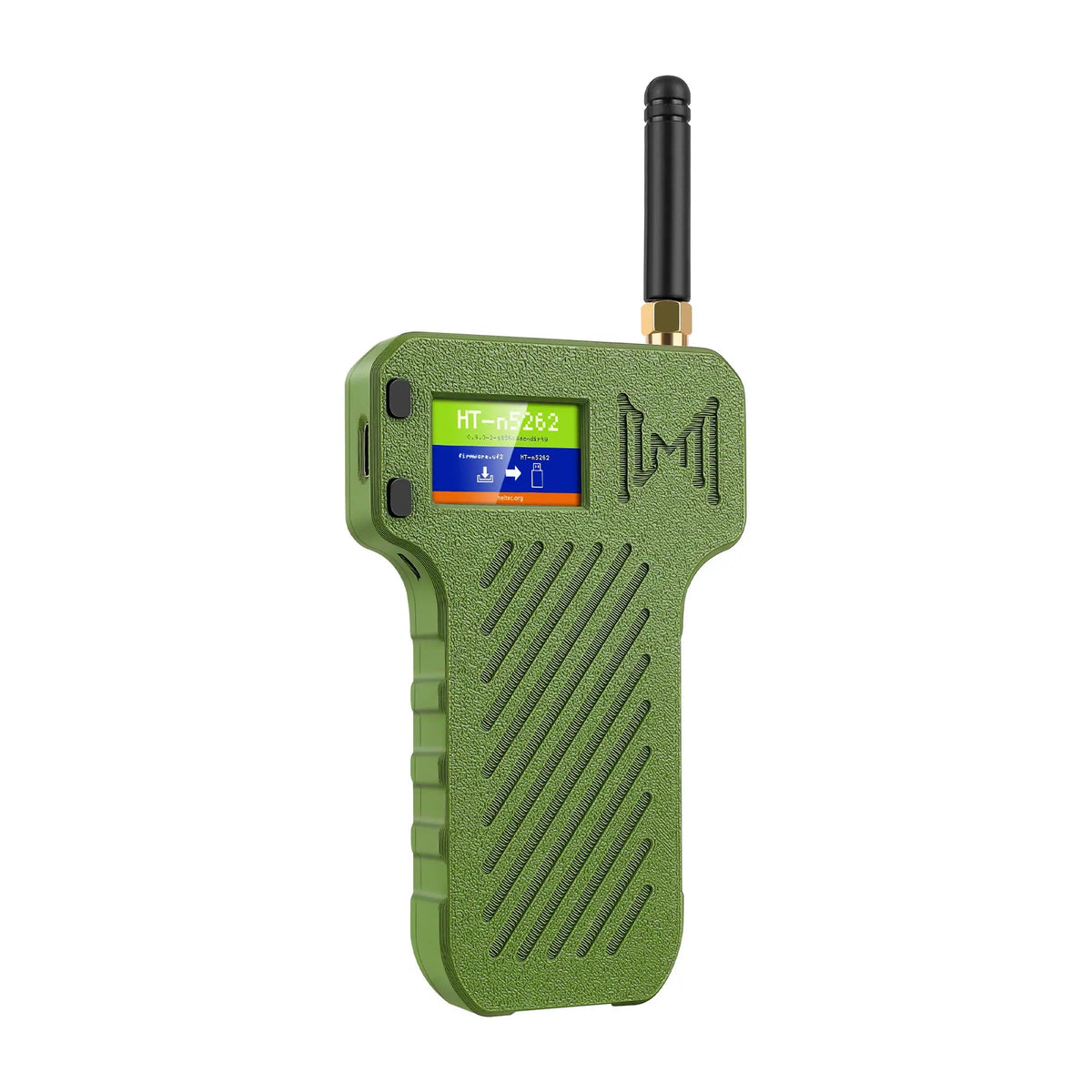
Hardware such as the Meshnology N36 LoRa Mesh Node can be particularly relevant to these projects because it combines LoRa connectivity with features such as an nRF52840 processor, GPS, TFT display, and 3000mAh battery.
These features can make a node more versatile for portable experiments and outdoor deployments.
GPS and LoRa for Tracking Applications
Combining GPS with LoRa can create useful possibilities for location-based IoT projects.
A GPS-enabled LoRa device can determine its position and transmit coordinates over a long-range wireless connection. This can be useful for asset tracking, outdoor activities, vehicle monitoring, wildlife research, and experimental telemetry systems.
Unlike Wi-Fi-based tracking, a LoRa solution does not necessarily need to remain within the coverage area of a conventional wireless router.
For developers experimenting with location-aware mesh networks, a node that includes GPS functionality can reduce the need to connect separate positioning hardware.
The N36's integrated GPS capability makes this type of experimentation more accessible, particularly when combined with its portable battery-powered design.
Choosing Hardware for a LoRa or Wi-Fi IoT Project
The wireless technology is only one part of an IoT system. Hardware selection should also consider processing capability, battery capacity, display options, antenna support, GPS functionality, physical size, and expandability.
For development projects, a flexible board can be more valuable than a device designed for only one specific application.
A platform such as the Meshnology N39 can be considered when a project requires a combination of Wi-Fi and LoRa capabilities. Its development-oriented design makes it suitable for prototyping and experimentation involving multiple wireless technologies.
For projects centered more specifically around portable LoRa mesh communication, the Meshnology N36 offers a different feature set, including LoRa connectivity, GPS, TFT display functionality, an nRF52840 processor, and a 3000mAh battery.
The right choice ultimately depends on the intended application rather than simply the number of features included.
Key Factors to Consider Before Choosing
Several questions can help determine whether LoRa or Wi-Fi is more appropriate for a particular IoT project.
First, consider the required communication distance. Short-range indoor applications may work well with Wi-Fi, while remote outdoor deployments may benefit from LoRa.
Next, consider the amount of data being transmitted. Video, audio, large files, and frequent high-speed communication favor Wi-Fi. Small sensor readings, status messages, and location updates are more suitable for LoRa.
Battery life should also be evaluated. Devices expected to run for long periods on batteries may benefit from LoRa's low-power characteristics.
Infrastructure is another consideration. If reliable Wi-Fi coverage already exists, using Wi-Fi can simplify deployment. If the project needs to operate away from traditional network infrastructure, LoRa or a LoRa mesh network may offer greater flexibility.
Finally, developers should consider whether GPS, displays, Bluetooth, solar charging, or other hardware capabilities are required.
The Future of Wireless IoT Connectivity
IoT networks are becoming increasingly diverse, and there is unlikely to be one wireless technology that is ideal for every application.
Wi-Fi will continue to play an important role in connected homes, businesses, industrial environments, and high-bandwidth applications. Its established infrastructure and strong data performance make it a practical choice for many connected devices.
LoRa, meanwhile, is well positioned for low-power, long-range applications where devices need to communicate over significant distances while transmitting relatively small amounts of data.
The development of more capable hardware is also making it easier to combine multiple wireless technologies. Platforms that bring together LoRa, Wi-Fi, Bluetooth, GPS, displays, and battery systems can give developers more options when designing IoT prototypes.
This flexibility is particularly valuable for experimental projects, where the final communication requirements may evolve during development.
Final Thoughts
The comparison between LoRa and Wi-Fi is less about determining an overall winner and more about understanding which technology fits a specific IoT application.
Wi-Fi is generally the stronger choice for high-speed communication, internet-connected devices, and environments where established wireless infrastructure is readily available. LoRa is better suited to long-range, low-power communication involving relatively small amounts of data.
For projects that require flexibility, combining technologies can be even more useful. A development platform such as the Meshnology N39 WiFi LoRa 32 V4 can provide a foundation for experimenting with both Wi-Fi and LoRa, while the Meshnology N36 LoRa Mesh Node offers features suited to portable mesh networking, GPS-based projects, and off-grid communication experiments.
As IoT continues to expand into remote monitoring, smart agriculture, tracking, environmental sensing, and decentralized communication, understanding the strengths and limitations of each wireless technology will remain essential. With the right hardware and network architecture, both LoRa and Wi-Fi can play valuable roles in building practical and innovative IoT systems.